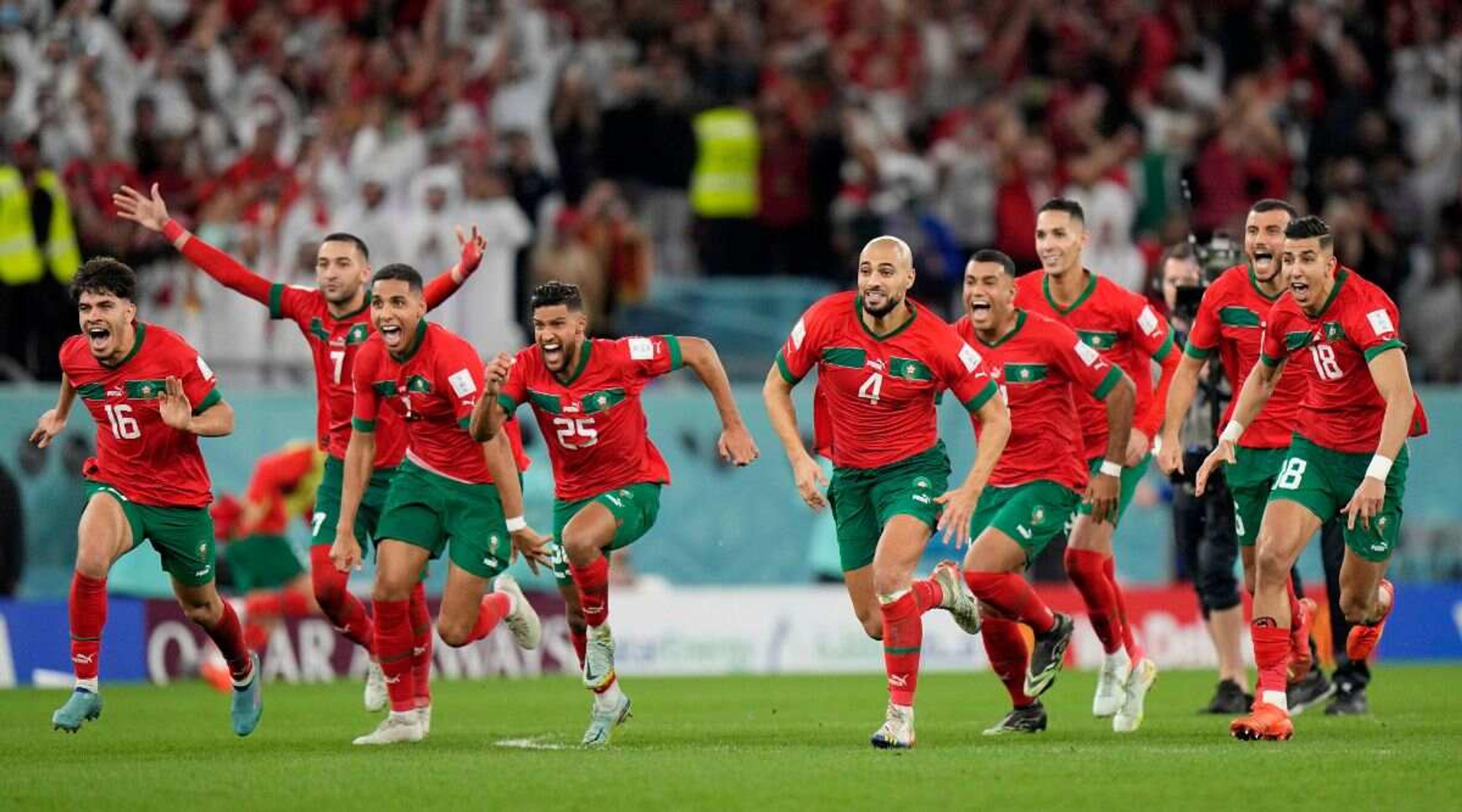
December 10, 2022. The final whistle blew at Al Bayt Stadium in Qatar. Morocco had just beaten Portugal 1-0. Achraf Hakimi fell to his knees. Yassine Bounou kissed the turf. In Casablanca, Rabat, Marrakech, and every corner of Morocco, millions poured into the streets. This wasn't just a celebration. This was the beginning of an economic earthquake that would reshape North African football forever.
Nobody saw it coming. Not the economists. Not FIFA. Not even the Moroccan Football Federation itself. What started as a sporting fairytale turned into a $2 billion economic phenomenon that would touch every corner of Moroccan society, from street vendors selling replica jerseys to billionaire investors suddenly interested in youth academies.
This is the story of how 90 minutes of football became the most profitable investment Morocco never planned to make.
The Immediate Explosion: When Jerseys Became Gold
On December 7, 2022, hours after Morocco eliminated Spain, a global supply shock hit the sportswear market. Puma, the national team's official kit supplier, faced an immediate worldwide stockout. Major retailers in Casablanca, Paris, and Doha reported completely depleted inventories within 24 hours of the match. The demand was so severe that Puma was forced to airlift emergency supplies to Qatar to meet the needs of fans and the team entourage, a logistical move rarely seen outside of product launches for major European clubs.
The scarcity created an instant secondary market bubble. Official jerseys, retailing at approximately $90, began trading on platforms like eBay and Vinted for upwards of $300 to $400. With official supply chains broken, the economic momentum shifted to Morocco’s domestic textile sector. Factories in Casablanca and Tangier ramped up production to near-capacity to fill the void with "supporter versions" and merchandise.

According to data from the Ministry of Industry and Trade, this surge contributed to a record-breaking year for the sector, which saw exports rise to 44 billion dirhams ($4.25 billion). The "Morocco Brand" effect went beyond simple jersey sales; it acted as a global marketing campaign for the country's textile capabilities, resulting in a year-on-year turnover boost estimated at over 5 billion MAD ($500 million) for the wider industry as international orders for Moroccan-manufactured goods spiked in the months following the tournament.
"But jerseys were just the beginning."
The Tourism Tsunami: Rebranding a Nation
If the merchandise boom was the spark, the tourism explosion was the fire. Before the World Cup, "Morocco" was a steady search term. During the tournament, Google Trends data showed global search interest in the country spiked by over 250%, surpassing typical holiday peaks. But unlike viral trends that vanish in a week, this digital curiosity converted directly into physical bookings. The "Soft Power" of the national team, showcasing a modern, passionate, and welcoming culture, did more for the country's brand in one month than two decades of paid advertising campaigns.

The numbers confirm the correlation. In 2023, the first full year post-Qatar, Morocco shattered all previous records, welcoming 14.5 million tourists, a 34% surge compared to 2022. This wasn't just a recovery from the pandemic; it was a redefinition of the market. The "Atlas Lions Effect" opened up entirely new demographics. Operators reported a sharp rise in visitors from the United States, Brazil, and the Middle East, markets that had previously viewed Morocco as a secondary destination.
This influx forced an infrastructure acceleration that continues today. To accommodate the surge and prepare for the 2030 World Cup (and the current AFCON 2026), the government signed a $600 million investment deal to increase airline capacity and hotel beds. Major global brands like Ritz-Carlton and Park Hyatt accelerated their openings in Marrakech and Rabat, betting that the football-driven visibility was not a fluke, but the new baseline.
The Money Men Arrive: Infrastructure as Strategy
While tourists filled the hotels, a different kind of visitor began arriving in Rabat's business districts. International investors, sovereign wealth funds, and sports conglomerates had taken notice of the "Moroccan Miracle."
They soon realized it wasn't a miracle at all. It was a product of industrial-scale planning.
The success of the Atlas Lions validated the sovereign strategy spearheaded by King Mohammed VI over a decade prior. The crown jewel was the Mohammed VI Football Academy, a $14 million state-of-the-art facility designed to identify and refine talent like Youssef En-Nesyri, Nayef Aguerd, and Azzedine Ounahi.
Seeing the Return on Investment (ROI) from this academy model, private capital flooded in. Real estate developers like Prestigia began integrating elite sports complexes into luxury housing projects in Marrakech and Rabat. Foreign clubs followed the money: Paris Saint-Germain opened new academy sites in Rabat in 2024, while FC Barcelona expanded its footprint with a second academy in Casablanca, treating the country not just as a fan base, but as a talent mine.
This shift aligned perfectly with Morocco’s new Investment Charter (2022), which offered incentives for job-creating sectors. The football ecosystem, previously seen as a money pit, was effectively re-evaluated by the market as a high-growth asset class. By 2025, the football market value in Morocco was projected to exceed $50 million in revenue, driven not just by ticket sales, but by player transfer fees, digital media rights, and infrastructure contracts.
The Sponsorship Gold Rush
Before December 2022, the Royal Moroccan Football Federation's (FRMF) commercial portfolio was respectable but static, relying heavily on state-linked entities like Maroc Telecom and Royal Air Maroc. The sponsorship revenue hovered around figures standard for a top-tier African nation—stable, but not market-shifting.
After the World Cup, the commercial landscape did not just grow; it mutated.
By March 2023, the Federation reportedly had to institute a waiting list for corporate partners. Puma, realizing the asset they had, secured their position as kit supplier with a renewed deal. Industry insiders estimate the new terms at a multiple of the previous contract value, locking in the "Atlas Lions" brand through the 2030 World Cup cycle.
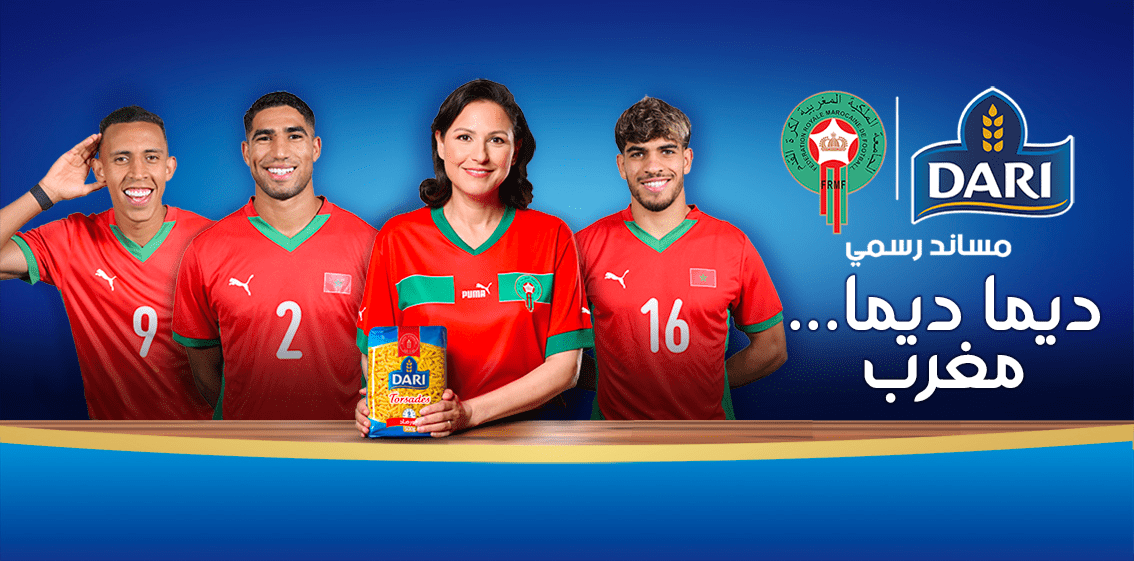
The most significant shift, however, was the diversification of capital. It wasn't just the usual state giants anymore; the private sector rushed in. DARI, the global couscous and pasta exporter, signed a landmark deal in January 2024, becoming one of the first major FMCG (Fast-Moving Consumer Goods) brands to back the national team. Royal Air Maroc didn't just renew; they leveled up, expanding their partnership to become the Official Global Partner of CAF itself, leveraging Moroccan football as the vehicle for their continental expansion strategy ahead of AFCON 2025.
The total sponsorship portfolio for the federation ballooned, with estimates suggesting commercial revenues have more than tripled since Qatar.
This liquidity cascaded down to the Botola Pro (national league). Wydad and Raja Casablanca, the country’s commercial powerhouses, leveraged the national boom to negotiate record-breaking deals. Raja, for instance, secured a historic capital investment from Marsa Maroc, valuing the club's commercial entity at over $50 million. Even second-tier clubs in cities like Meknes and Tetouan found themselves in the unfamiliar position of having leverage, signing front-of-shirt sponsors for the first time in their history as local businesses scrambled to associate with the game that had conquered the world.
The Broadcast Revolution: From Local Feeds to Global Screens
For decades, Moroccan domestic football was a local secret, broadcast primarily on Arryadia (the state sports channel) with production quality that rarely met international standards. The 2022 World Cup changed the calculus. When 186 million people tuned in to watch Morocco vs. France in the semi-final, breaking viewership records in the MENA region, global broadcasters realized there was an untapped market for North African football.
The demand shifted overnight. Major networks didn't just want the national team; they wanted the ecosystem that produced it.
By the time AFCON 2025/26 arrived, the media landscape had transformed. CAF and the Moroccan organizers secured a record-breaking 20 media rights partnerships across Europe, including landmark free-to-air deals with Channel 4 (UK) and BBC, ensuring Moroccan matches reached households that had never watched African football before. The tournament was broadcast in over 180 territories, a massive leap from previous editions which often struggled for consistent European coverage.
To meet this global scrutiny, the product had to look different. The "grainy feeds" of the past were replaced by a state-of-the-art production strategy. For the first time, production duties were split between SNRT and international firms, introducing 4K drone shots, spider-cams, and European-tier direction to stadiums in Tangier and Rabat. This wasn't just football; it was a tech upgrade. The arrival of streaming giants, including Netflix's debut daily highlights show for the tournament, signaled the final phase of this revolution: Moroccan football was no longer just content for television; it was a premium digital asset.
The Ripple Effect: A Regional Arms Race
Morocco's success didn't just change the Kingdom; it altered the entire North African football economy, triggering what analysts call a "regional insecurity complex." Tunisia, Algeria, and Egypt were no longer just competing for trophies; they were competing for the economic validity of their sporting models.
For neighbors, the pressure was immediate. In Algeria, the state accelerated its massive infrastructure program, inaugurating world-class venues like the Nelson Mandela Stadium to prove they could match Morocco's hosting capabilities. Egypt, the historical giant of the continent, responded by integrating elite sports facilities into its New Administrative Capital, realizing that relying on history was no longer enough to attract global capital.

The most tangible shift, however, was Morocco's export of "Soft Power."
Rabat became the continent's unofficial classroom. The Royal Moroccan Football Federation (FRMF) leveraged its success to sign partnership conventions with African nations. Delegations from Sub-Saharan Africa arrived not just to play, but to study the "Mohammed VI Model." The Academy began acting as a consultancy hub, exporting technical directors and expertise to federations in West Africa.
This wasn't just charity; it was strategy. By hosting training camps for nations like Burkina Faso, Niger, and The Gambia, Morocco positioned itself as the logistical capital of African football, ensuring that when the time came to vote for host nations (like AFCON 2025 or World Cup 2030), the continent’s support was already secured.
The Long Game: The Road to 2030
Ultimately, the $2 billion impact of 2022 was just the trailer. The main event is 2030.
The credibility Morocco earned in Qatar was the final piece of the puzzle needed to secure the hosting rights for the Centenary World Cup in 2030, alongside Spain and Portugal.
This hosting right is the true economic "Golden Ticket." It has triggered a massive infrastructure pipeline valued at over $15 billion, acting as a Keynesian stimulus package for the construction, transport, and services sectors for the next six years.
The portfolio is industrial in scale:
- The Grand Stade Hassan II: Located in Benslimane, this 115,000-seat fortress designed by Oualalou + Choi and Populous is set to be the largest football stadium in the world. Its design is officially inspired by the "Moussem," the traditional Moroccan social gathering, featuring a tented roof that blends into the forest landscape.
- Transport Upgrades: A $1.6 billion overhaul of Mohammed V International Airport, building a new terminal to boost its capacity to 35 million passengers, while the national airport network targets a total capacity of 80 million.
- High-Speed Rail: The Al-Boraq TGV line is breaking ground on its extension from Kenitra to Marrakech, effectively linking the north to the south. This will cut the Tangier–Marrakech journey to under 3 hours and connect the economic capital (Casablanca) to the tourist capital (Marrakech) in just over 1 hour.
While the 2022 World Cup generated immediate cash flow through tourism and merchandise, the 2030 project is the foundational layer of the "New Morocco", a nation where infrastructure is built at the speed of sport.
The Reality Check
It is important to remain grounded. Football did not solve Morocco's structural economic issues overnight.
The macro-numbers hide a micro-reality. Despite the GDP boost, youth unemployment remains stubbornly high, hovering around 36%, and the cumulative effect of post-2022 inflation continues to squeeze the middle class. The wealth generated by this football boom has not yet trickled down evenly; a "two-speed economy" is emerging where the Atlantic coastal cities thrive on infrastructure spending, while rural areas and lower-tier football clubs still struggle to pay basic wages.

However, the trajectory is undeniable. Before 2022, football in Morocco was a passion and a pastime. Today, it is a strategic industry, a diplomatic tool, and a proven engine of growth.
"When Achraf Hakimi fell to his knees in Qatar, he didn't just celebrate a victory. He signaled that Morocco was open for business. And the world accepted the invitation."
Debriefing (0)
Add to the File