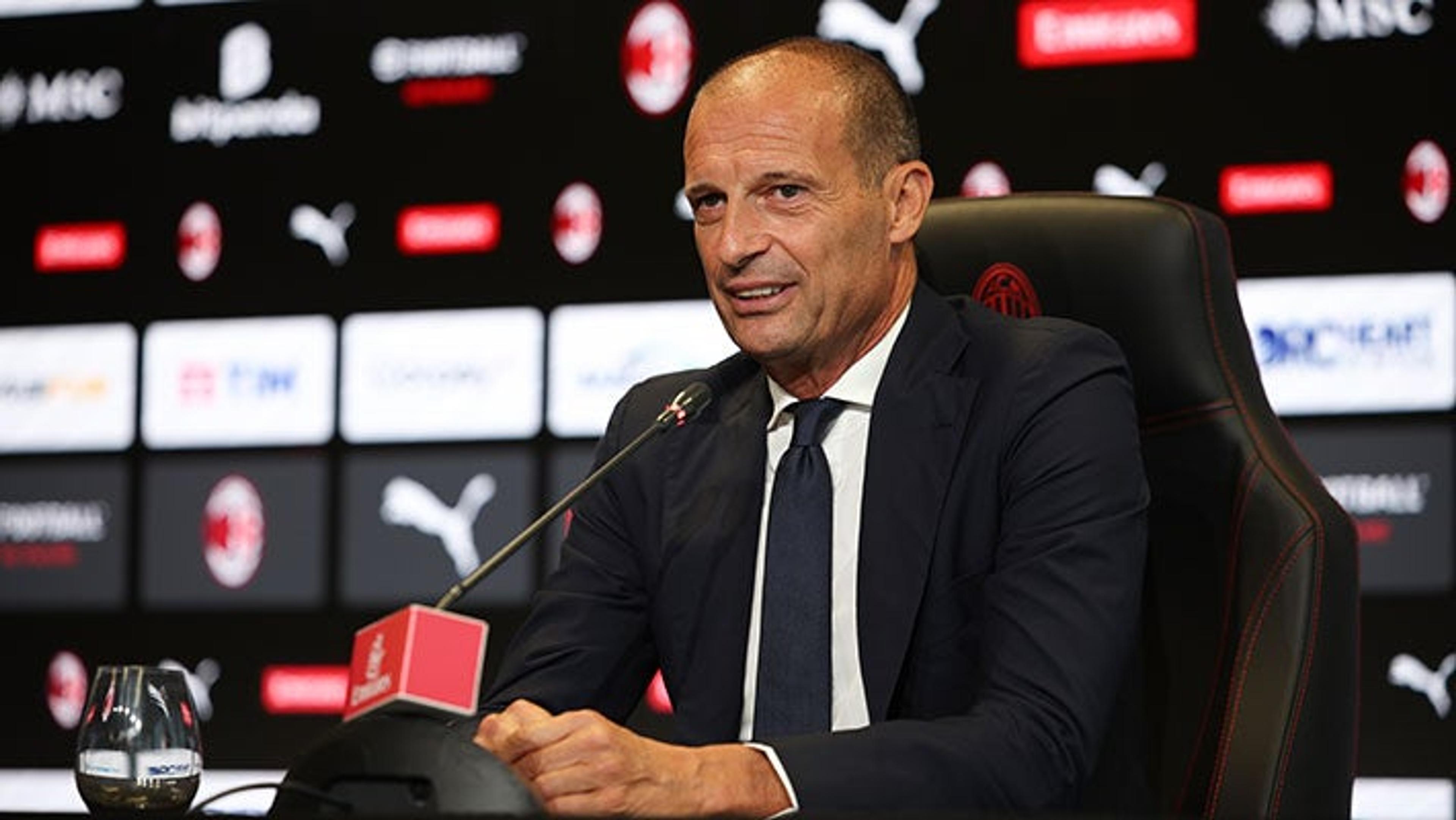
The Weight of AC Milan No.9 Shirt
There is an unwritten rule that Massimiliano Allegri has turned into a career-defining dogma: "Il gioco è semplice, ma non è facile" (The game is simple, but it isn't easy). While modern managers obsess over 2-3-5 rotations and inverted fullbacks, Allegri's success has always relied on a singular, ancient structural requirement, called The Anchor. He demands a striker who does not play for himself, but for the geometry of the team. From Ibrahimović to Mandžukić, and now to Füllkrug, the lineage is unbroken.

The Swan of Utrecht - Marco Van Basten(Credit: @acmilan)
There's a reason the No. 9 at Milan always feels heavier than the shirt itself. It isn't just goals. It's a memory. Van Basten's beauty, Inzaghi's obsession, Zlatan's inevitability, Giroud's calm. Every generation adds another layer of expectation until the number stops being a position and becomes a test of identity.
But here's the uncomfortable truth: in an Allegri-style team, the No. 9 is often less "hero" and more system component. Not a crown. A lever. A release valve. A way to turn pressure into territory, and territory into a moment. Allegri's best sides have been built to win different kinds of games rather than insisting on one pure ideology. That mindset fundamentally changes what "great striker play" even looks like. Sometimes it's not about domination, it's about survival with purpose.
The Philosophical Foundation: "È Molto Semplice"
The answer begins in Allegri’s 2019 publication, È molto semplice (It’s Very Simple), where he outlines his "32 Rules for Football." Allegri argues that tactical complexity is often a mask for poor fundamental understanding. His central thesis emphasizes "knowing your players' characteristics" above rigid systems, which leads directly to his requirement for a "Vertical Reference"—a player capable of functioning as a structural lighthouse when the midfield is submerged.
This isn't anti-football; it is intelligent pragmatism. According to tactical analysis regarding defensive block mechanics, Allegri’s preference for a compact shape necessitates a "long-ball outlet" to prevent fatigue. Without this escape valve, the team is forced to play through sustained high pressure, dramatically increasing the Expected Threat (xT) in the defensive third, exactly where turnovers are most lethal.
The Proof: The Zlatan Anomaly (2011/12) The evidence is found in the data of the 2011/12 Scudetto-fighting campaign. While critics remember "long balls," the data reveals "Vertical Efficiency."
- The Myth: Milan just "kicked" it to a target man.
- The Reality: They used Zlatan Ibrahimović as a singular bypass mechanism. In that season, Ibrahimović was directly involved in 44% of AC Milan’s total Serie A goals (28 goals, 8 assists)—the highest individual dependency rate of any player in Europe’s top five leagues.
- The Mechanic: Milan didn't lead the league in total long balls, but they led in effective verticality. Zlatan’s ability to kill high passes allowed him to generate 4.1 shots per game (Serie A leader), proving that the "Bypass" wasn't a desperation clearance. It was the team's primary playmaker.
The Physical Profile Evidence
We don't need to guess if Füllkrug fits. The data shows he is a near-perfect clone of Allegri’s most successful Scudetto-winning strikers.

Max Allegri No.9 Comparison
The Tactical Insight:
Key Insight: Füllkrug leads all contemporary strikers in aerial duels won per 90 (3.813.813.81) while maintaining elite holdup efficiency (71.5%71.5\%71.5%). This mirrors Zlatan's 2010-11 role, not as the primary scorer, but as the gravitational center that collapses defenses and creates space for runners.
This brings us to Milan's present challenge, and it's a significant one.
Milan currently possesses elite "Runners" but lacks the "Anchor" to release them. This creates a Structural Mismatch.
Allegri now has Rafael Leão, Christian Pulisic, Alexis Saelemaekers, and Christopher Nkunku, all attacking players who thrive as space occupiers, runners, or second strikers. These are not players who want to receive the ball with their back to goal. They want to attack space, exploit gaps, and arrive late into danger zones. Meanwhile, Santiago Giménez, while talented, is also not the Allegri archetype, he's more of a penalty-box poacher than a physical reference point.
This creates a structural mismatch. Allegri's system demands a player who can act as the anchor, but Milan's attacking personnel are designed to function around space, not create space through physical presence. It's like having a tactical jigsaw puzzle where the central piece is the wrong shape.
"Why do Leão and Pulisic struggle in tight games? Because they are being asked to create space rather than exploit it.
"

AC Milan Current Attacking Player
The uncomfortable reality is that Milan's attacking cast—Leão's explosiveness, Pulisic's off-ball movement, Nkunku's versatility are all predicated on having someone ahead of them who can do the dirty work. They need a striker who can win duels in the air, hold up play under pressure, and allow them to arrive late into the spaces created by that gravitational pull.
Conclusion: Building to Support, Not Just to Acquire
So the real question for Milan isn't "Do we have a worthy No. 9?" The better question is: "Have we built a Milan that can support any No. 9?"
If the answer is yes, then talent shines. If the answer is no, then even good strikers look average, and the shirt becomes an impossible burden.

Pippo Inzaghi AC Milan No. 9(Credit: beritamilan.com)
Allegri's philosophy has always been simple: know your players' characteristics, and build a system that amplifies their strengths while covering their weaknesses. The "Bypass Blueprint" isn't about playing long balls because you lack quality, it's about having the tactical flexibility to escape pressure when opponents force you into difficult situations.
With Füllkrug, Allegri would have his anchor. With Leão, Pulisic, Saelemaekers, and Nkunku, he would have the runners who profit from that anchor's gravitational pull. The theory is elegant. The question is whether Milan can execute the practice, whether they can integrate a physical reference point without sacrificing the dynamism that makes their attackers special.
References & Further Reading
Statistical Analysis:
- FBref.com - Niclas Füllkrug: Scouting Report (2024/25)
- Opta Performance Data - Striker Metrics Across Europe's Top Five Leagues
Tactical Theory:
- Cox, M. (2017). The Mixer: The History of Premier League Tactics - Context on the Target Man Archetype
- Spielverlagerung - "Centravanti di Manovra: The Tactical Striker in Italian Football"
- The Athletic Football Tactics - "The Gravity of the No. 9" by Liam Tharme (2024)
Historical Data:
- Lega Serie A Official Statistics - Season 2010/11 vs 2024/25 Comparison
- Lega Serie A Official Archives (2012) - Long Pass Completion Data
Primary Sources:
- Allegri, M. (2019). È molto semplice - "32 Rules for Football"
- Coaches' Voice - Tactical Analysis Archives on Allegri's Juventus
What am I missing?
"Allegri’s blueprint requires sacrificing aesthetics for structure. If Füllkrug guarantees points but makes the football 'boring' compared to the Pioli era, is that a price you are willing to pay?"




1Comments